Japan · Leone · 1971–1994
1994 Subaru Leone
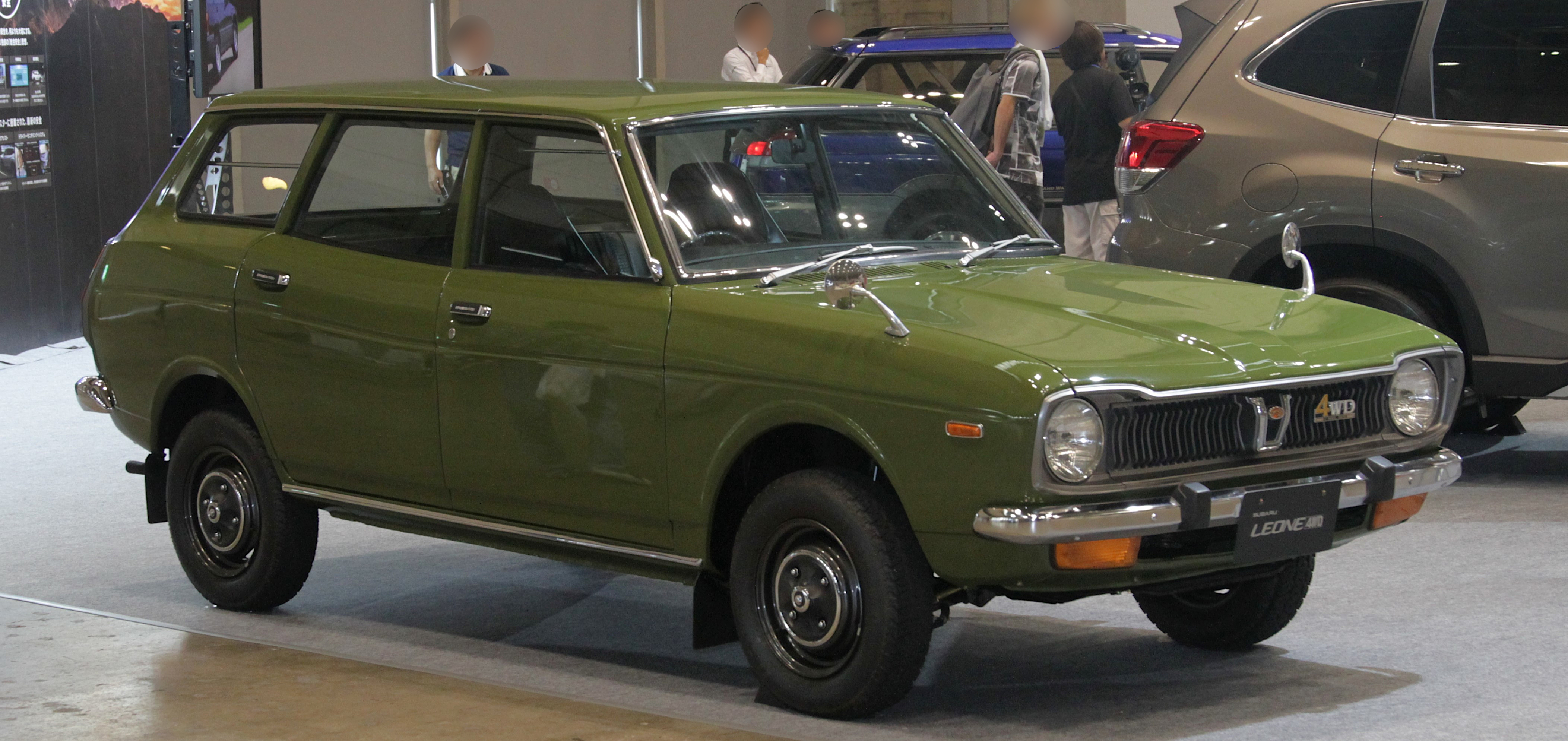
The last Subaru-built Leone
The Estate Van ended in March 1994, closing 23 years of Subaru-built Leones. From April the Leone Van name went on a Nissan AD Van supplied to Subaru, which was sold until March 2001. Japanese Wikipedia counts 202,734 third-generation Leones registered in Japan.
Year by year
The 1994 model year
What changed for 1994
- Estate Van discontinued in March
- Nissan-supplied Leone Van from April
1994 Leone facts and figures
| Japan sales | 202,734 third-generation registrations in Japan to February 1994 | Wikipedia |
|---|
Specifications
Leone specifications
These figures cover the whole generation (1971–1994); each says which market and model year it applies to.
| Years and markets | Japan: 7 October 1971 to 1994 (Estate Van to April 1994). U.S.: from 1972 as DL, GL, GLF, GL-10 and RX, then Loyale. Australia and New Zealand from 1973; Israel 1973–1991 | Wikipedia 2 , Subaru Corporation , IDOM Inc. (Gulliver, 221616.com) |
|---|---|---|
| Chassis codes | First generation: A21, A22, A62, A64, A65, A67 and related. Second: AB2/4, AM2, AF5, AJ5. Third: AA2–AA5, AL3/5/7, AG4–AG6; Estate Van AP2/AP3 | Wikipedia , IDOM Inc. (Gulliver, 221616.com) |
| Body styles | 2-door coupe, 2-door hardtop, 2- and 4-door sedan, 5-door wagon and van, 3-door hatchback (Swingback), 3-door liftback coupe; BRAT coupe-utility on the same base | Wikipedia |
| Assembly plant | Yajima Plant, Ōta, Gunma, Japan; Waitara, New Zealand (CKD assembly from 1978) | Wikipedia |
| Engines | EA-series flat-fours: 1.1 L EA61, 1.2 L EA64, 1.3 L EA65, 1.4 L EA63, 1.6 L EA71, 1.8 L EA81 OHV and EA81 turbo, 1.8 L EA82 SOHC and EA82 turbo | Wikipedia 2 |
| Output | Japan 1.6 EA71: 80 PS sedan, 85 PS wagon (1970s); 76 PS (56 kW) at 5,200 rpm (1987–94). Europe 1.6: 83 PS DIN at 5,600 rpm; Europe 1.8 turbo: 120 PS. U.S. 1.6: 67 hp at 5,200 rpm (49-state) | Wikipedia , IDOM Inc. (Gulliver, 221616.com) |
| Transmissions | 4- and 5-speed manual, dual-range 4- and 5-speed manual, 3-speed automatic (from 1975), 4-speed electronically controlled automatic (third generation) | Wikipedia |
| Drive system | Front-wheel drive; part-time 4WD wagon from September 1972; push-button 4WD with automatic from November 1981; full-time 4WD from 1988 per Wikipedia a | Wikipedia , Fuji Heavy Industries Ltd. (now Subaru Corporation) , Cars101.com (Joe Spitz) 2 |
| Wheelbase | 2,455 mm (96.7 in) first generation; 2,445 mm (96.3 in) second; 2,470 mm (97.2 in) third-generation sedan | Wikipedia |
| Overall length | 3,995 mm (157.3 in) first generation; 4,285 mm (168.7 in) second; 4,435 mm (174.6 in) third-generation sedan b | Wikipedia |
| Width | 1,500 mm (59.1 in) first generation; 1,620 mm (63.8 in) second; 1,660 mm (65.4 in) third | Wikipedia , IDOM Inc. (Gulliver, 221616.com) |
| Height | 1,385 mm (54.5 in) first generation; 1,415 mm (55.7 in) second; 1,335 mm (52.6 in) third-generation 2WD sedan | Wikipedia |
| Curb weight | 775 kg (1,709 lb) first generation; 1,091 kg (2,405 lb) second; 1,060–1,070 kg (2,337–2,359 lb) third-generation RX | Wikipedia |
| Fuel capacity | Japan 1987–94: 60 L (15.9 US gal) | IDOM Inc. (Gulliver, 221616.com) |
| Fuel economy | U.S. MY1984–1989 sedans, wagons, hatchbacks and RX: 19–30 mpg combined (EPA) | U.S. Department of Energy and U.S. Environmental Protection Agency |
| Base price | Japan 1986–92 catalog range: 1,056,000–2,376,000 yen. U.S. 1987 GL 3-door hatchback: $8,293, as reported by Cars101. | IDOM Inc. (Gulliver, 221616.com) , Cars101.com (Joe Spitz) |
| Sales | Japanese registrations: 399,576 first generation, 207,862 second, 202,734 third. Israel: about 220,000–250,000 sold 1973–1991. RX: 1,500 sedans in the first year and 2,600 coupes in all | Wikipedia 2 |
- Drive system. Cars101's Subaru of America history dates full-time all-wheel drive on certain U.S. models to 1986 and a torque-varying system to 1987. Its 1988 table names full-time 4WD on the GL-10 turbo wagon and RX. ↩
- Overall length. Gulliver's Japanese catalog lists the 1987–1992 sedan at 4,370 mm (172.0 in) and the Estate Van at 4,410 mm (173.6 in). ↩
Buy · Own
Buying and owning a 1994 Leone
Budget for rust repair and thin parts support on a Leone-era wagon
- Inspect closely for rust before anything else. Enthusiast retrospectives and for-sale write-ups name rust, not mechanical failure, as the main reason clean Leone/GL/DL-era cars (roughly late 1970s to mid-1980s, EA81-engine cars) are now uncommon; a rust-free one is a real find. Check the wheel arches, rocker panels and floor pan closely, however clean the car looks in photos.
- Expect to hunt for parts, and expect some items to be unavailable new. Some wear items (water pumps, interior trim, basic service parts) are still available through specialty and salvage-adjacent suppliers, but availability varies by part and model year. Join a dedicated forum before buying so you know what you can source and what you'd have to fabricate or import.
- The EA81 has a better community reputation than the later EA82, per forum discussion. Forum owners give the EA81 engine a stronger reliability reputation than the later EA82.
Verify the actual nameplate, trim, and generation before trusting a seller's 'Leone' label
- Confirm the trim actually matches the claimed year. Subaru never sold this car as the 'Leone' in the US. American buyers got trim badges (DL, GL, GLF, GL-10, RX) through the 1980s, then the Loyale name for the third generation from about 1990 (1990-1994 is approximate). A US car advertised as a 'Leone' may be using the JDM name loosely, may be a real JDM import, or may be mislabeled; ask which, and check the trim badge and chassis-code plate against the claimed generation.
- Don't assume the 1972 AWD wagon 'world's first' claim is marketing fact. Sellers and enthusiast write-ups sometimes call the Leone 4WD Estate Van the 'world's first' mass-production AWD passenger wagon. Subaru's own anniversary press material calls it Japan's first. The low-volume Jensen FF (UK) and a one-off 1903 Spyker prototype came earlier.
Plan for rust maintenance and a real parts hunt on a Leone-era car
- Enthusiast retrospectives name rust, not mechanical failure, as the reason clean survivors of this era are rare finds. Inspect wheel arches, rockers and floor pans regularly, even on a clean car, and deal with surface rust before it turns structural.
- Some wear items remain available through specialty and salvage-adjacent suppliers, but availability varies by part and model year. Join a dedicated forum before you need a part, so you know what can be found and what you'll have to fabricate or import.
- Forum owners give the EA81 engine a better reliability reputation than the later EA82; compare notes with other owners of your specific engine.
Follow the evidence
Sources
- スバル・レオーネ (Japanese Wikipedia)
Japanese new-vehicle registration totals by Leone generation (first 399,576; second 207,862; third 202,734 to the month before sales ended), cited to DeAgostini nos. 7, 8 and 11, and the April 1994 switch to the Nissan-supplied Leone van.
Wikimedia Foundation (Japanese Wikipedia contributors) · accessed 2026-11-14 - Leone/GL/DL (EA81-era) rust and parts-availability buying notes
Documents rust (not mechanical failure) as the dominant reason clean surviving EA81-era Leone/GL/DL examples are now uncommon, and confirms some OEM-adjacent replacement parts remain available through specialty/salvage channels.
japanesenostalgiccar.com; barnfinds.com; rme4x4.com; classic-trader.com · accessed 2026-07-24 - Subaru Leone (Wikipedia)
Generations/chassis codes: 1st gen A21/22/62/64/65 (1971-1981); 2nd gen AB/AM/AF/AJ (1979-1989, note the overlap with gen 1's tail); 3rd gen AA/AL/AG (1984-1994, also overlapping) — the article's own generation date ranges overlap each other, and the article does not reconcile them.
Wikimedia Foundation · accessed 2026-07-22 - Subaru Loyale (Wikipedia)
Leone manufactured globally 1971-1994; US introduction from 1972 under trim names, shifting to "Loyale" branding for the third generation starting 1990.
Wikimedia Foundation · accessed 2026-07-22 - "First mass-produced AWD passenger car" — competing claims about the 1972 Leone
Some retrieved snippets state the September 1, 1972 Subaru Leone 4WD Estate Van was "Japan's first mass-produced all-wheel drive passenger vehicle" (matching Subaru's own press-release language).
Respective independent outlets · accessed 2026-07-22 - Subaru U.S. Media Center — "Subaru Produces 20-Millionth All-Wheel Drive Vehicle" press release
Subaru's own press release states: the 1972 Subaru Leone 4WD Estate Van was "Japan's first mass-produced all-wheel drive passenger vehicle" — in Subaru's own words, a first for Japan, not the world.
Subaru of America, Inc. (media.subaru.com) · accessed 2026-07-22 - Four-wheel drive (Wikipedia) — early AWD passenger-car history section
Jensen FF (1966-1971, 318 units): described as first use of 4WD in a production GT sports car; unusual ~40/60 front/rear torque split.
Wikimedia Foundation · accessed 2026-07-22