Japan · Rex · 1972–1992
1990 Subaru R-2 and Rex
660 cc for the new kei rules
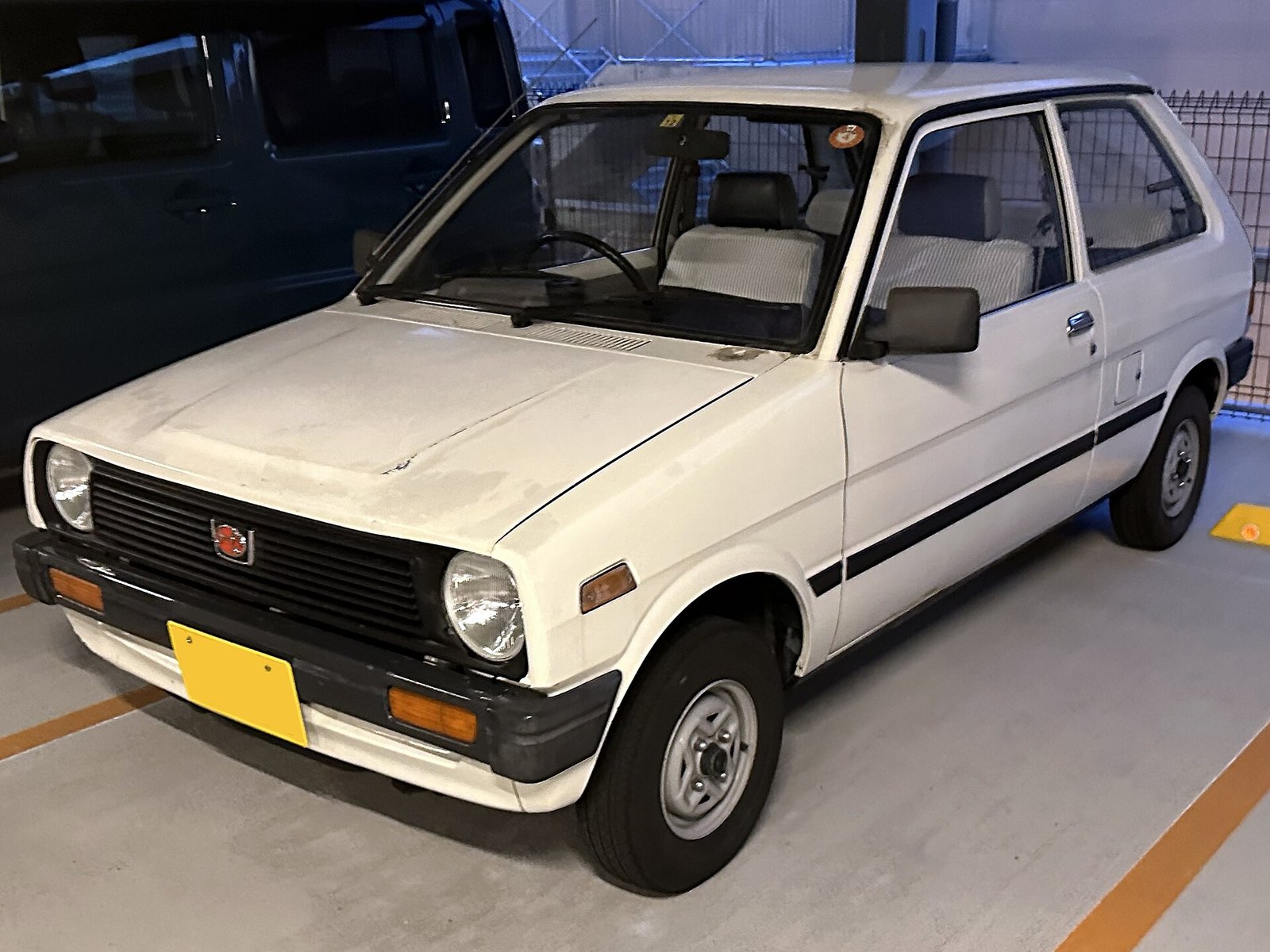
The kei limit rose to 660 cc, and in April 1990 every Rex took the EN07 engine. Japanese Wikipedia lists 64 PS supercharged, 42 PS with a carburettor, and 48 PS manual or 46 PS ECVT with fuel injection. The nose was lengthened with new headlamps and bumper and came out rounder. The Combi name was retired and the commercial model became the Rex Van again.
Year by year
The 1990 model year
What changed for 1990
- EN07 660 cc engine across the range
- Longer, rounder nose
- Combi renamed Rex Van
1990 R-2 and Rex facts and figures
| Engines | 660 cc EN07 inline-four a | Wikipedia |
|---|---|---|
| Output | Carburettor: 42 PS; fuel injection: 48 PS manual, 46 PS ECVT; supercharged: 64 PS | Wikipedia |
- Engines. Japanese Wikipedia dates the change to April 1990; English Wikipedia gives March 1990. ↩
Specifications
Rex specifications
These figures cover the whole generation (1972–1992); each says which market and model year it applies to.
| Years and markets | Japan: 15 July 1972 to March 1992. Exported to Europe, South America, Australia, New Zealand and the Caribbean under other names a | Wikipedia 2 , Subaru Corporation |
|---|---|---|
| Chassis codes | 1972–81: K21, K22, K23, K24, K26, K42, K43, K44. 1986–89: KG1/KG2 (Combi), KN1/KN2. 1989–92: KH1–KH4, KP1–KP4 (Combi) | Wikipedia , IDOM Inc. (Gulliver, 221616.com) |
| Body styles | 2- and 4-door sedan, 3-door van and wagon, Swingback (1972–81); 3- and 5-door hatchback and Combi van (1981–92); canvas-top 3-door from May 1988 | Wikipedia |
| Assembly plant | Subaru-chō Plant, Ōta, Gunma, Japan; Rex 5 also built in Taiwan from January 1977; second generation built under license in China as the Yunque GHK 7060 (1991–2005) | Wikipedia |
| Engines | Rear-mounted twins 1972–81: 356 cc EK34 two-stroke, 358 cc EK21, 490 cc EK22, 544 cc EK23. Front-mounted 1981–92: 544 cc EK23 (turbo option from December 1983), 547 cc EN05 four (June 1989), 658 cc EN07 four (March 1990); export 665 cc EK42 twin and 758 cc EN08 four | Wikipedia |
| Output | 1972 two-stroke: 32–37 PS. 1973 EK21: 31 PS (23 kW) at 8,000 rpm. 1977 EK23: 31 PS at 6,200 rpm. 1986 twin: 30 PS or 36 PS. 1988 supercharged: 55 PS (40 kW). 1989 EN05: 38 PS (28 kW) at 7,500 rpm; supercharged 61 PS (45 kW) at 6,400 rpm. 1990–92 EN07: 42–48 PS (31–35 kW) | Wikipedia , IDOM Inc. (Gulliver, 221616.com) |
| Transmissions | 4- and 5-speed manual; Autoclutch (1980); 2-speed automatic (1986–89); ECVT from June 1987 | Wikipedia , IDOM Inc. (Gulliver, 221616.com) |
| Drive system | Rear engine, rear drive 1972–81; front-wheel drive from August 1981; on-demand 4WD from October 1983; Twin Viscous full-time 4WD from February 1987 | Wikipedia |
| Wheelbase | 1,920 mm (75.6 in) 1972–81; 2,255 mm (88.8 in) 1981–86; 2,295 mm (90.4 in) 1986–92 | Wikipedia , IDOM Inc. (Gulliver, 221616.com) |
| Overall length | 2,995 mm (117.9 in) 1972–76; 3,185–3,190 mm (125.4–125.6 in) 1976–81; 3,195 mm (125.8 in) 1981–90; 3,295 mm (129.7 in) 1990–92 | Wikipedia , IDOM Inc. (Gulliver, 221616.com) |
| Width | 1,295 mm (51.0 in) 1972–76; 1,395 mm (54.9 in) from 1976 | Wikipedia , IDOM Inc. (Gulliver, 221616.com) |
| Height | 1,255–1,385 mm (49.4–54.5 in) 1972–81; 1,410–1,445 mm (55.5–56.9 in) 1989–92 | Wikipedia , IDOM Inc. (Gulliver, 221616.com) |
| Curb weight | 480–570 kg (1,058–1,257 lb) 1972–81; 565 kg (1,246 lb) 1981–86; 560–710 kg (1,235–1,565 lb) 1989–92 | Wikipedia , IDOM Inc. (Gulliver, 221616.com) |
| Fuel capacity | 1989–92: 32 L (8.5 US gal) | IDOM Inc. (Gulliver, 221616.com) |
| Fuel economy | Japan 10-15 mode, 1989–92: 16.6–22.0 km/L (39–52 mpg US) | IDOM Inc. (Gulliver, 221616.com) |
| Base price | Family Rex van, October 1979: 480,000 yen. 1989–92 range: 519,000–1,171,000 yen including tax | Wikipedia , IDOM Inc. (Gulliver, 221616.com) |
| Production | 1,902,811 over three generations | Wikipedia 2 |
- Years and markets. Japanese Wikipedia ends production in February 1992 and sales in March 1992. ↩
Follow the evidence
Sources
- スバル・レックス (Japanese Wikipedia)
Rex generations and the three-generation production total of 1,902,811, cited to DeAgostini's Weekly Japanese Famous Cars nos. 13, 14 and 56; production of the Rex ended February 1992 and sales March 1992.
Wikimedia Foundation (Japanese Wikipedia contributors) · accessed 2026-11-14 - Subaru Rex (Wikipedia)
Production 1972-1992; replaced the R-2, succeeded by the Vivio (March 1992).
Wikimedia Foundation · accessed 2026-07-22 - Subaru R-2 (Wikipedia)
Production 1969-1972; "full model change" of the Subaru 360, retaining the rear-engine layout.
Wikimedia Foundation · accessed 2026-07-22