Japan · Rex · 1972–1992
1987 Subaru R-2 and Rex
Twin Visco full-time 4WD and the ECVT
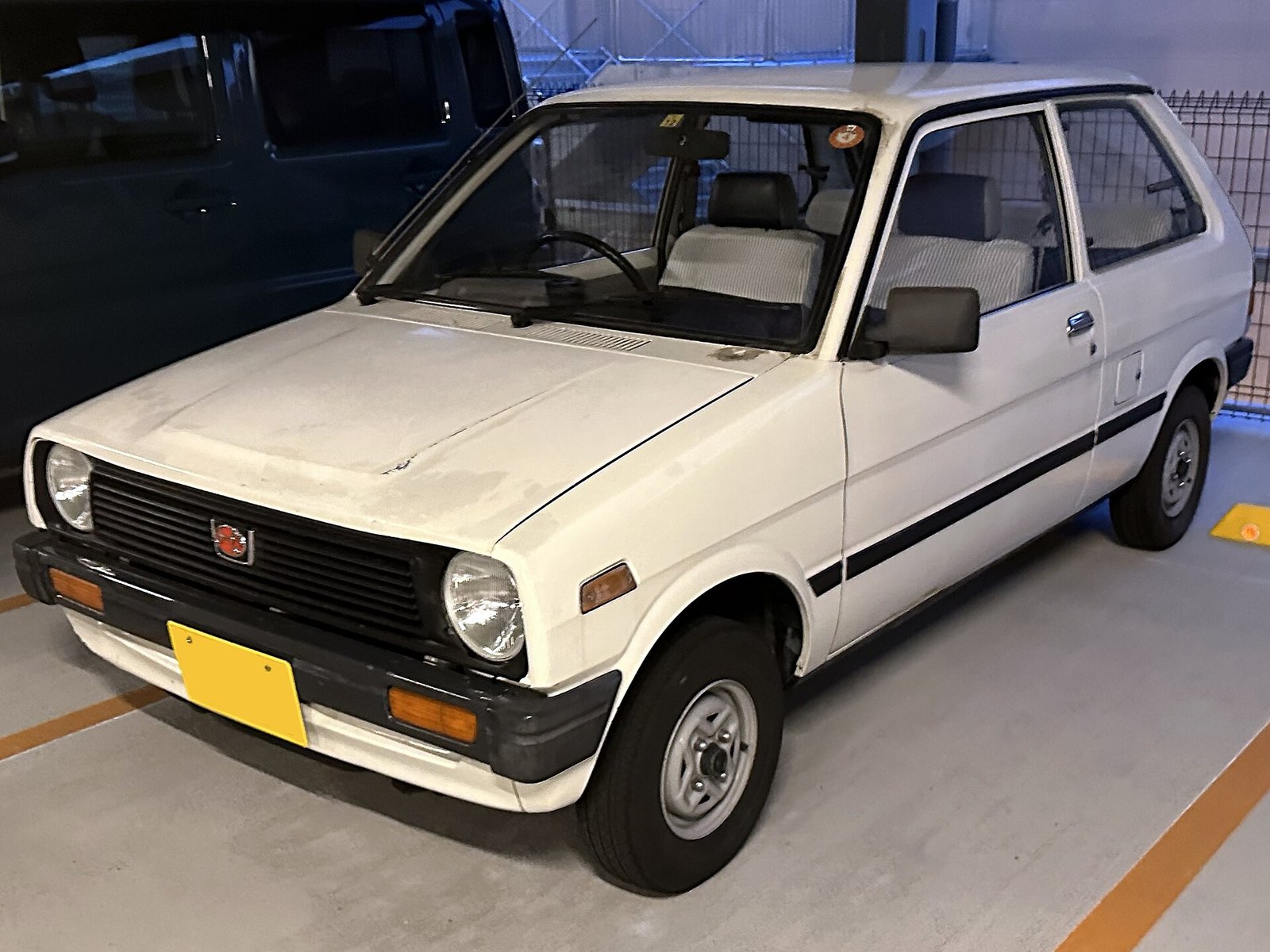
In January 1987 the five-door sedan gained full-time four-wheel drive. Subaru called it Twin Visco: two viscous couplings side by side in the rear differential handled both the front-to-rear split and the left-to-right limited slip. A five-door Viki joined the Combi. June brought the ECVT, Subaru's electronically controlled continuously variable transmission, and the all-white Vicky limited edition.
Year by year
The 1987 model year
What changed for 1987
- Twin Visco full-time 4WD on the 5-door sedan from January
- ECVT models from June
- Vicky limited edition
1987 R-2 and Rex facts and figures
| Transmissions | Manual; 2-speed automatic; ECVT from June 1987 | Wikipedia |
|---|---|---|
| Special editions | Vicky (white limited edition, repeated until June 1989) | Wikipedia |
Specifications
Rex specifications
These figures cover the whole generation (1972–1992); each says which market and model year it applies to.
| Years and markets | Japan: 15 July 1972 to March 1992. Exported to Europe, South America, Australia, New Zealand and the Caribbean under other names a | Wikipedia 2 , Subaru Corporation |
|---|---|---|
| Chassis codes | 1972–81: K21, K22, K23, K24, K26, K42, K43, K44. 1986–89: KG1/KG2 (Combi), KN1/KN2. 1989–92: KH1–KH4, KP1–KP4 (Combi) | Wikipedia , IDOM Inc. (Gulliver, 221616.com) |
| Body styles | 2- and 4-door sedan, 3-door van and wagon, Swingback (1972–81); 3- and 5-door hatchback and Combi van (1981–92); canvas-top 3-door from May 1988 | Wikipedia |
| Assembly plant | Subaru-chō Plant, Ōta, Gunma, Japan; Rex 5 also built in Taiwan from January 1977; second generation built under license in China as the Yunque GHK 7060 (1991–2005) | Wikipedia |
| Engines | Rear-mounted twins 1972–81: 356 cc EK34 two-stroke, 358 cc EK21, 490 cc EK22, 544 cc EK23. Front-mounted 1981–92: 544 cc EK23 (turbo option from December 1983), 547 cc EN05 four (June 1989), 658 cc EN07 four (March 1990); export 665 cc EK42 twin and 758 cc EN08 four | Wikipedia |
| Output | 1972 two-stroke: 32–37 PS. 1973 EK21: 31 PS (23 kW) at 8,000 rpm. 1977 EK23: 31 PS at 6,200 rpm. 1986 twin: 30 PS or 36 PS. 1988 supercharged: 55 PS (40 kW). 1989 EN05: 38 PS (28 kW) at 7,500 rpm; supercharged 61 PS (45 kW) at 6,400 rpm. 1990–92 EN07: 42–48 PS (31–35 kW) | Wikipedia , IDOM Inc. (Gulliver, 221616.com) |
| Transmissions | 4- and 5-speed manual; Autoclutch (1980); 2-speed automatic (1986–89); ECVT from June 1987 | Wikipedia , IDOM Inc. (Gulliver, 221616.com) |
| Drive system | Rear engine, rear drive 1972–81; front-wheel drive from August 1981; on-demand 4WD from October 1983; Twin Viscous full-time 4WD from February 1987 | Wikipedia |
| Wheelbase | 1,920 mm (75.6 in) 1972–81; 2,255 mm (88.8 in) 1981–86; 2,295 mm (90.4 in) 1986–92 | Wikipedia , IDOM Inc. (Gulliver, 221616.com) |
| Overall length | 2,995 mm (117.9 in) 1972–76; 3,185–3,190 mm (125.4–125.6 in) 1976–81; 3,195 mm (125.8 in) 1981–90; 3,295 mm (129.7 in) 1990–92 | Wikipedia , IDOM Inc. (Gulliver, 221616.com) |
| Width | 1,295 mm (51.0 in) 1972–76; 1,395 mm (54.9 in) from 1976 | Wikipedia , IDOM Inc. (Gulliver, 221616.com) |
| Height | 1,255–1,385 mm (49.4–54.5 in) 1972–81; 1,410–1,445 mm (55.5–56.9 in) 1989–92 | Wikipedia , IDOM Inc. (Gulliver, 221616.com) |
| Curb weight | 480–570 kg (1,058–1,257 lb) 1972–81; 565 kg (1,246 lb) 1981–86; 560–710 kg (1,235–1,565 lb) 1989–92 | Wikipedia , IDOM Inc. (Gulliver, 221616.com) |
| Fuel capacity | 1989–92: 32 L (8.5 US gal) | IDOM Inc. (Gulliver, 221616.com) |
| Fuel economy | Japan 10-15 mode, 1989–92: 16.6–22.0 km/L (39–52 mpg US) | IDOM Inc. (Gulliver, 221616.com) |
| Base price | Family Rex van, October 1979: 480,000 yen. 1989–92 range: 519,000–1,171,000 yen including tax | Wikipedia , IDOM Inc. (Gulliver, 221616.com) |
| Production | 1,902,811 over three generations | Wikipedia 2 |
- Years and markets. Japanese Wikipedia ends production in February 1992 and sales in March 1992. ↩
Follow the evidence
Sources
- スバル・レックス (Japanese Wikipedia)
Rex generations and the three-generation production total of 1,902,811, cited to DeAgostini's Weekly Japanese Famous Cars nos. 13, 14 and 56; production of the Rex ended February 1992 and sales March 1992.
Wikimedia Foundation (Japanese Wikipedia contributors) · accessed 2026-11-14 - Subaru Rex (Wikipedia)
Production 1972-1992; replaced the R-2, succeeded by the Vivio (March 1992).
Wikimedia Foundation · accessed 2026-07-22 - Subaru R-2 (Wikipedia)
Production 1969-1972; "full model change" of the Subaru 360, retaining the rear-engine layout.
Wikimedia Foundation · accessed 2026-07-22